
Loading...
Serving Buckeye, AZ and surrounding areas. (623) 320-0313
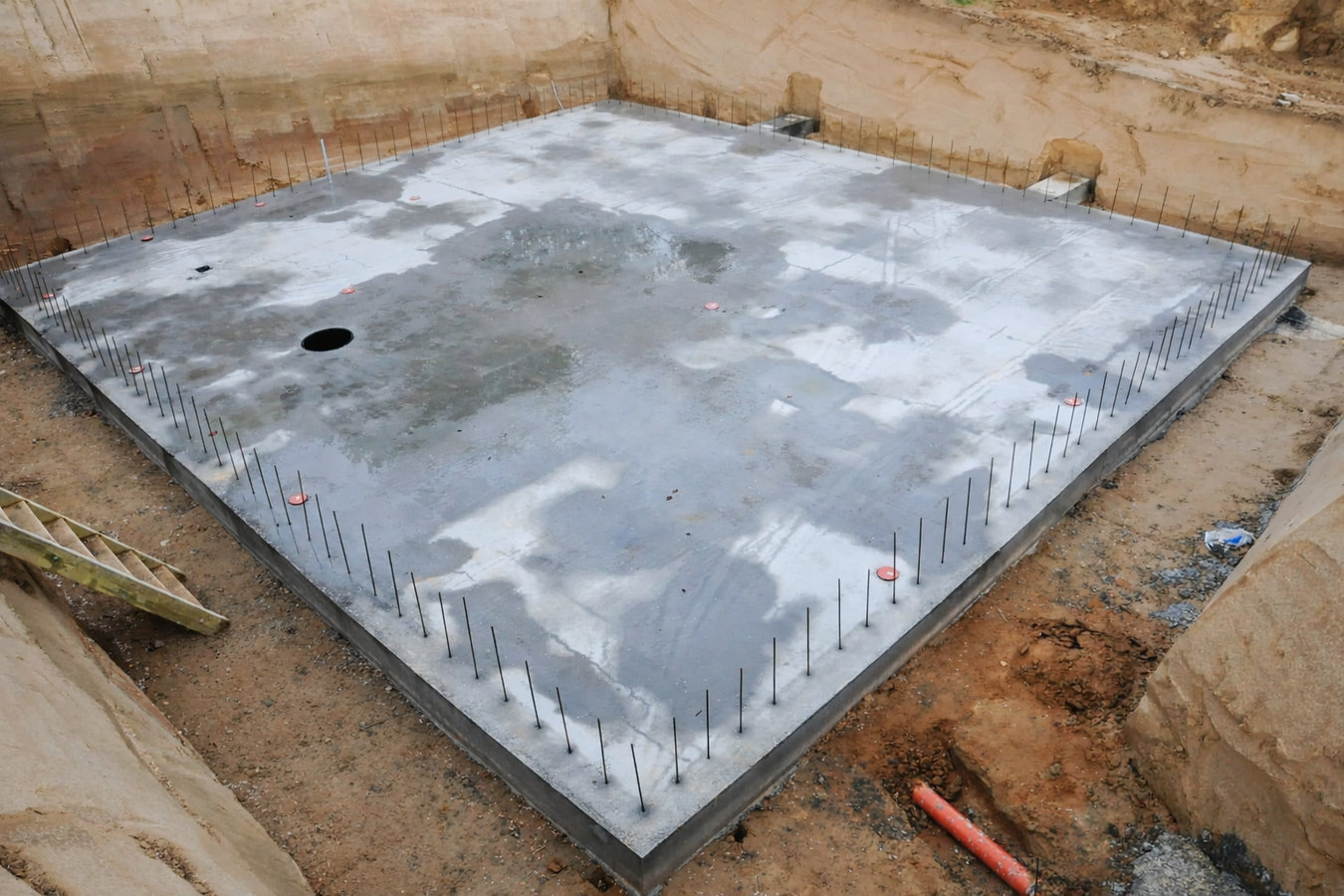
Your foundation carries everything above it. We build it right for Buckeye's caliche soil, extreme heat, and monsoon season so it stays solid from the first day to the last.
Foundation installation in Buckeye means grading and compacting the ground, assessing soil conditions for clay and caliche layers, placing a gravel drainage bed and moisture barrier, setting steel reinforcing bars inside the forms, and pouring a concrete slab that serves as the structural base for your home. Most residential projects run three to seven days from site prep to the completed pour, with at least a week of curing before framing can begin.
Most homes in the West Valley are built on slab foundations because the desert climate makes them practical and cost-effective. The challenge in Buckeye specifically is the soil. Clay-heavy ground moves with the seasons, caliche layers complicate excavation, and monsoon rains can saturate the site before compaction is finished. These are not hypothetical problems - they are regular job-site realities here.
If your project requires a simpler or smaller concrete base, our slab foundation building service covers standard residential pours with the same soil prep and permit coordination.
If you are starting a new construction project in Buckeye, a foundation must be installed before anything else can happen. No framing, no walls, and no roof can go up safely without a properly prepared and poured concrete base beneath them. This is the starting point for every new build in the city.
When a foundation shifts, the house frame shifts with it. Doors that suddenly stick, windows that will not latch, or gaps appearing at the corners of door frames are all signs that something is moving below. In Buckeye, this is often tied to clay soil swelling and shrinking through wet and dry cycles. It does not always mean a full replacement, but it warrants a professional look.
Small hairline cracks in concrete are common and often harmless. Cracks that are wider than a quarter-inch, that run diagonally from the corners of windows or doors, or where one side sits higher than the other are warning signs. In Buckeye, these patterns often trace back to soil movement beneath the slab. Do not wait to have them looked at - small cracks become bigger ones when the soil moves again.
During Buckeye's monsoon season, if you notice water sitting against the base of your home rather than draining away, that is a problem. Water in contact with a foundation in clay-heavy soil accelerates the swelling and shrinking cycle that causes cracking and shifting. Proper grading and drainage around the foundation perimeter is one of the most cost-effective ways to protect your foundation long-term.
Foundation installation is not just a pour. It starts with a site visit and soil assessment before we ever put a number on paper. We check for caliche depth, clay content, and drainage patterns on your lot - all of which affect how the foundation needs to be designed and built. That information goes into your written estimate so nothing unexpected surfaces after work starts.
Once the contract is signed, we handle the permit application with the City of Buckeye's Development Services department. We coordinate the required pre-pour inspection, and in communities with HOAs, we assist with the approval process. On pour day, the crew works early in the morning to protect the concrete from the heat. After the pour, we manage active curing for the first week to prevent surface cracking and strength loss.
Larger projects sometimes call for a concrete parking lot or commercial slab as part of the same build. We handle concrete parking lot building alongside foundation work when the scope calls for it. For projects that need the foundation anchored deeper into stable soil, slab foundation building with footing integration is also available. All project documentation - permits, inspection sign-offs, and closeout paperwork - is provided at completion.
Suits homeowners building a new home on a raw lot or infill parcel, where the ground needs full preparation before any structure can go up.
Suits homeowners expanding an existing home, where the new addition needs its own poured base tied into the current structure.
Suits homeowners adding a detached garage, guest house, workshop, or ADU that requires a separate permitted foundation.
Suits homeowners who have noticed cracking, shifting, or sticking doors and want a professional to assess the current state of their existing slab.
Buckeye has been one of the fastest-growing cities in the United States for several years running. That growth is good for the city, but it also means the market is full of concrete crews who are new to the area and may not understand local conditions. The expansive clay and caliche soils in the West Valley behave differently from soils in Phoenix proper, let alone from other states. A foundation that performs well in a different soil environment may not perform the same way here without modification.
Monsoon season adds another variable. A pour scheduled for July or August without accounting for afternoon storm patterns can result in rain hitting fresh concrete before it has set. Saturation of a just-compacted sub-base can also require re-grading before the pour. Experienced local contractors plan around these risks. Newer crews often do not.
We serve homeowners throughout Buckeye, from established neighborhoods near Verrado and Tartesso to newer subdivisions along the I-10 corridor. We also regularly work in Goodyear and Surprise, where soil conditions are closely comparable to Buckeye.
Call or submit your project details and we will respond within one business day. We schedule a site visit before giving you a written estimate. A phone quote without seeing the lot cannot account for soil conditions, site access, or existing drainage - details that directly affect cost and timeline.
We assess your lot's soil conditions, including caliche depth and clay content, before finalizing the foundation design. Your written estimate breaks out labor, materials, site prep, and permit fees separately. You will know exactly what you are paying for before anything is signed.
We submit the permit application to the City of Buckeye's Development Services department and wait for approval before any work begins. Once the permit is in hand, we grade and compact the soil, lay gravel and the moisture barrier, and place the steel reinforcement. A city inspector checks this work before the concrete is poured.
In Buckeye's heat, pours are scheduled for early morning hours. After the pour, we keep the surface moist during the curing period to prevent heat-related cracking. Once curing is complete and the final city inspection is passed, we provide your permit closeout documents and walk you through the finished work.
Free site visit, written estimate, and full permit coordination included. We respond within one business day.
(623) 320-0313We have installed foundations across 12 communities in the greater Phoenix metro, including cities that share Buckeye's challenging clay and caliche soil profiles. That breadth of local work means soil surprises rarely catch us off guard, and our estimates reflect what the job will actually cost in this part of Arizona.
We handle the permit application, pre-pour inspection scheduling, and closeout documentation through the City of Buckeye's Development Services department. You get the paperwork to prove the work was done to code - which matters if you ever refinance, sell, or need to show a future contractor what is under your home.
City of Buckeye Development ServicesIf your project falls within Buckeye's monsoon window, we monitor forecasts, have contingency scheduling in place, and will not pour on a day when rain could damage fresh concrete. Summer foundation work in the West Valley requires this level of planning - and we have it built into our standard process.
Our concrete placement, reinforcement, and curing practices follow the standards established by the American Concrete Institute. These are the same guidelines Buckeye's city inspectors reference when they evaluate your foundation - so what they see when they arrive matches what was committed to on paper.
American Concrete InstituteA foundation is invisible once your home is built. That is exactly why the permit record, the pre-pour inspection, and the closeout documentation we hand you at the end of the job matter. They are verifiable proof - from the city, not just from us - that the work under your home was done correctly.
Arizona foundation contractors are licensed and regulated by the Arizona Registrar of Contractors. Verify any contractor's license before signing a contract.
Concrete parking lot construction for commercial and residential properties, built to handle Buckeye's traffic loads and heat cycle.
Learn moreResidential and commercial slab pours with full soil prep, moisture barrier, steel reinforcement, and permit handling.
Learn moreWest Valley construction demand is high and contractor availability moves fast. Call today or request a free written estimate and we will respond within one business day.